Each illustrations is labeled with the title of the book, year of
publication and illustrator’s name. For more of a sneak peek, here is a
link to the Pinterest
page for the book When I got the books, I flipped through the pages
with a nostalgic smile on my face. Of course the pictures struck a deep
chord. I LOVED the Pokey Little Puppy! Each of the ladies I gave a
book to thought it had been written just for her. This book makes a
great gift and serves as a special reminder of life’s simple lessons.
Following all of the lovely suggestions is the refrain – “And if you do,
your life will be golden.”
I am a reader and book evangelist. For many years I have kept a reading journal with little descriptions of the books I read and dates I read them. Kind of a trail of book bread crumbs that chart my interests over a given course of time. This blog gives me a way to continue my journal and share my reading interests with others. My latest adventures in creating, dining, and traveling can be found at my website LindasOtherLife.com
Saturday, May 10, 2014
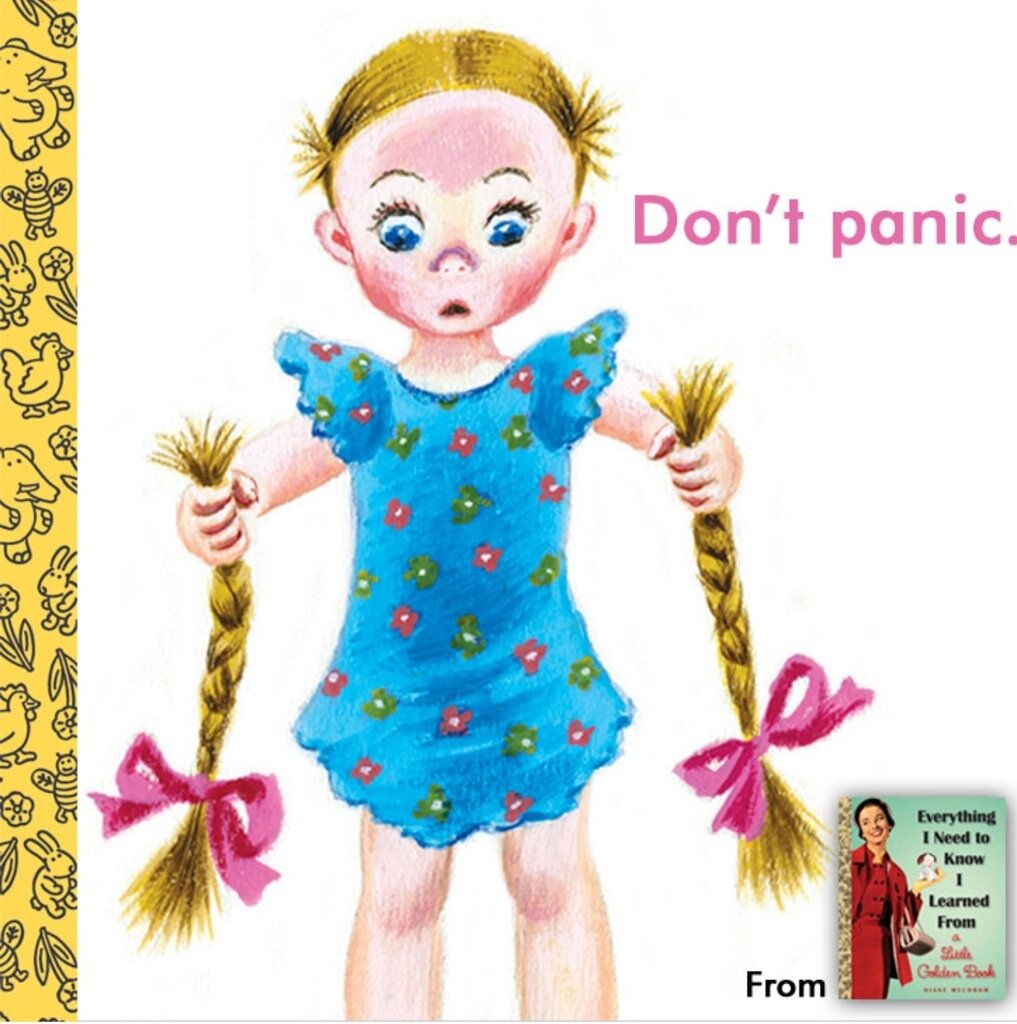
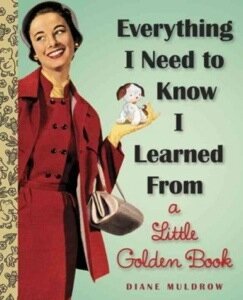
Everything I Need to Know I Learned from a Little Golden Book by Diane Muldrow
For Mother’s Day I purchased 5 of these and gave them to some of the
finest mothers I know! I only wish I had thought of this idea first!
Muldrow pairs illustrations from some of the best loved Little Golden
Books with a litany of life instructions. Like this -
Monday, May 05, 2014
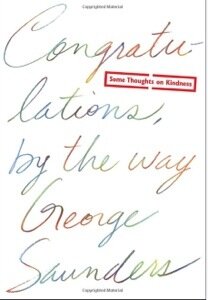
Congratulations by the Way by George Saunders
Graduation season is upon us again, and a tiny part of me misses
sharing in the exuberance and optimism of graduating seniors. The last
several years, I would leave my seniors with a reading of protagonist
Blue Vermeer’s fictitious commencement address from Special Topics in Calamity Physics
by Marisha Pessl, in which she advises her classmates to “Live like a
Goldfish”. If I were teaching today, I would be excited to use this
slender new book, Congratulations, by the Way: Some Thoughts on Kindness
by George Saunders. Saunders
is an acclaimed author – one of TIME’s 100 Most Influential People in
the world, a MacArthur “Genius Grant” fellow – best known for his
numerous short story collections. This new book contains the text of
his 2013 Syracuse University commencement address, which is not the
usual patronizing sort, but more of a humble recognition that most of
his regrets in life have to do with “failures of kindness.” Since it
came out in April, this book has been getting quite a bit of attention –
from Brainpickings to Salon. This short video
includes an excerpt from the book about a girl Sauders knew in school
who he wishes now he had shown more kindness. The speech is endearing
and the book would make the perfect graduation gift!
Sunday, April 13, 2014
Bread and Butter by Michelle Wildgen
I was really excited to pick up this new foodie novel from the library. I enjoy reading fiction and watching movies set in restaurants, and with Michelle Wildgen's background in food writing, I thought it would be a great book. Instead, I found myself skimming chapters and skipping ahead. On the positive side, the food writing is pretty great. Her descriptions of dishes are mouthwateringly delicious and I could picture the inside of the restaurants from her visual descriptions. But the plot is luke warm. Two brothers who are restaurant partners are challenged when the third brother decides to open a new restaurant across town. There is an undercurrent of sibling rivalry, a few forbidden romance scenes, and day-to-day patter of restaurant business stress. I kept waiting for something big to happen, and it did not. I would say Bread and Butter is an appropriate title. It was certainly no Lamb's neck with Jerulasem artichokes, broccoli rate and gremolata, even if that is the new restaurant's signature dish.
Friday, April 04, 2014
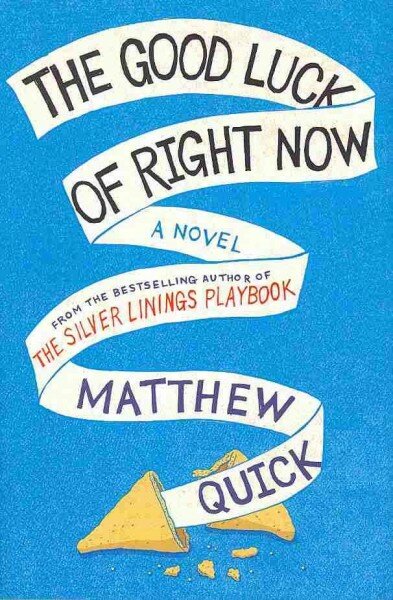
The Good Luck of Right Now by Matthew Quick
I did not read The Silver Lining Play Book by Matthew Quick, but loved the quirky movie characters enough to order this new novel from the library after reading a little bit about it. The first chapter is a letter to Richard Gere written by thirty-eight year old protagonist Bartholomew Neil, and I almost quit when I paged ahead and realized that all of the chapters are written as letters to Richard Gere. But I stuck with Bartholomew because something sweet and innocent and troubled about him reminded me of the protagonist Christopher in Mark Haddon's The Curious Incident of the Dog in the Nighttime. Bartholomew is trying to heal following the loss of his mother, who he cared for, from cancer. Following her death, the priest who has been visiting the family for years moves in, complicating Bartholomew's life, which has already been complicated enough by the grief counseling sessions he has to attend. At counseling he meets "F-bombing" Max, the brother of the Girlibrarian that Bartholomew has already fallen for. The novel ends with a zany road trip and an awkward, fragile sense of closure for all of the characters. The layers of Catholicism, Jungian psychology, philosophy of Dalai Lama, fear of alien invasion and feline worship make for a much smarter book than I anticipated. In the end, Bartholomew's mother's advice, that we must believe in the good luck of right now, rings true.
Monday, March 24, 2014
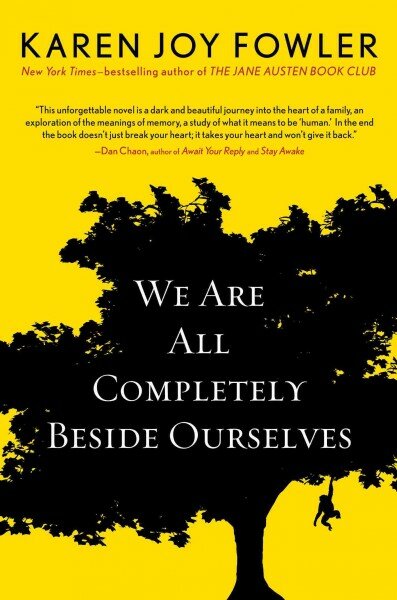
We Are All Completely Beside Ourselves by Karen Joy Fowler
This is our book club selection for April, and I think there will be plenty to talk about. I was glad that I knew nothing about the novel when I began it, and maybe even a little glad that - once again - I had accidentally ordered a large print edition with a different cover from the one above from the library. So, I hadn't noticed the chimpanzee hanging from the tree. I hate to spoil things! Suffice it to say, Fowler's novel is about separate family members attempting to heal from a great loss. The protagonist and narrator, Rosemary, is in college in the opening chapter of the novel when she promises the reader that she is beginning at the middle of the story. She flashes back to her early life with her "sister" was taken away without explanation when Rosemary was six years old, and the time shortly afterward, when her brother disappears. Her father is a psychology professor, and the passages of the novel that deal with Noam Chomsky, the psychology of happiness and solipsism make it a very smart book, indeed. One passage I bookmarked would be enough to keep a book club going all night - "And so we constantly infer someone else's intentions, thoughts, knowledge, lack of knowledge, doubts, desires, beliefs, guesses, promises, preferences, purposes and many, many more things in order to behave as social creatures in the world." I didn't love the book, but it kept me thinking.
Saturday, March 15, 2014
Boy, Snow, Bird by Helen Oyeyemi
I received a digital review copy of this fascinating novel and will admit
to being unable to put it down for about a week. The opening line is,
“Nobody ever warned me about mirrors so for many years I was fond of
them, and believed them to be trustworthy.” Boy Novak is a teenager who
has just fled from her abusive father when the narrative opens. She
lands in a small Massachusetts town where she meets and eventually
marries a widower named Arturo who has a daughter named Snow. Didn’t
take much for THIS intelligent reader to assume that a character named
Bird would be forthcoming. Sure enough, Bird is the name that Boy gives
to the daughter she and Arturo have. But the novel is much, much more
complex than this simple synopsis suggests. It is full of magical
realism details and borrow heavily from fairy tales, especially Snow
White. It tackles race and what qualified as “passing” in the late
fifties and early sixties. It unmasks gender issues. Helen Oyeyemi is
gifted, and this complex novel left me wanting to have a reading buddy
to dissect its hall of mirrors with as soon as I put the book down.
Friday, February 14, 2014
The Rosie Project by Graeme C. Simsion
Just in time for Valentine’s Day, a review of the quirkiest and most refreshing love story I have fallen for in a while. Don Tillman is a genetics professor with autistic behaviors that have made it difficult for him to find a mate. He has developed The Wife Project, a multi-page questionnaire which should help those like him to filter out incompatible companions – ones who drink, smoke, show up late, mess the place up and bring chaos into calm spaces. Along comes Rosie Jarman, a disorganized bartender full of flaws who is searching for her biological father. Rosie and Don should be oil and water but she is able to switch his focus from finding a wife to finding her father, which results in The Father Project. One thing leads to another in this mad-cap, love-affirming novel. Simsion is an Australian author and I first saw this book on display in England where I learned that it was first written as a screenplay and the movie is set to film next year. You can even take the online quiz to see whether you are a Rosie or a Don. I was lucky enough to get an advance readers copy and I have already given it away. Give yourself a Valentine’s Day reading gift – it will delight!
Tuesday, January 21, 2014
The Luminaries by Eleanor Catton

The Luminaries by Eleanor Catton is a book I chose to read on my iPad this winter because its glowing screen can be read against the sparkly backdrop of the the Christmas tree in the corner of the room with no other lights on – if I get up the read when everyone else is asleep. A perfect book for a long winter’s night – 832 pages. Even the title suggests illumination.
The Luminaries is a saga – a story told and repeatedly retold by the myriad characters who lives criss-cross in the 19th century gold rush mining town of Hokitika, in New Zealand. One stormy night, a newcomer named Walter Moody stumbles into the first hotel he sees after suffering through a mind-jarring sea voyage that may have even caused him to see a ghost. Inside the warm hotel, he begins to overhear the secret conversations of 12 men who have come together on that particular night to unravel the secret that joins them. The reader learns a hermit is dead, a whore has overdosed, a young man and a significant fortune is missing and – the resolution to this tale is very, very far away.
The opening chapters of the book are ridiculously long – 40 pages plus. I almost gave up within the first 100 pages. Each chapter begins with a sort of old school italics chapter abstract. Skimming ahead to read a few of these, I quickly realized each of the twelve players would be recounting his own version of the mystery before any plot resolution got underway. I knew before beginning the book that that would be the case. I had read – and agree with the New York Times review that asserts, “It’s a lot of fun, like doing a Charlotte BrontĂ«-themed crossword puzzle while playing chess and Dance Dance Revolution on a Bongo Board. Some readers will delight in the challenge, others may despair.” That, and the fact that the cover of the book, and the zodiac graphics between sections of the book, suggest that the phases of the moon and astrological shifts are Catton’s clever framework for the novel. Let’s just say – that was too much of a challenge for me. Although the chapters get shorter as the book wears on (the final chapters are each just a page), I was eager to see it end. I should have heeded my own promise not to get mixed up in books that require a character chart inside the front cover.
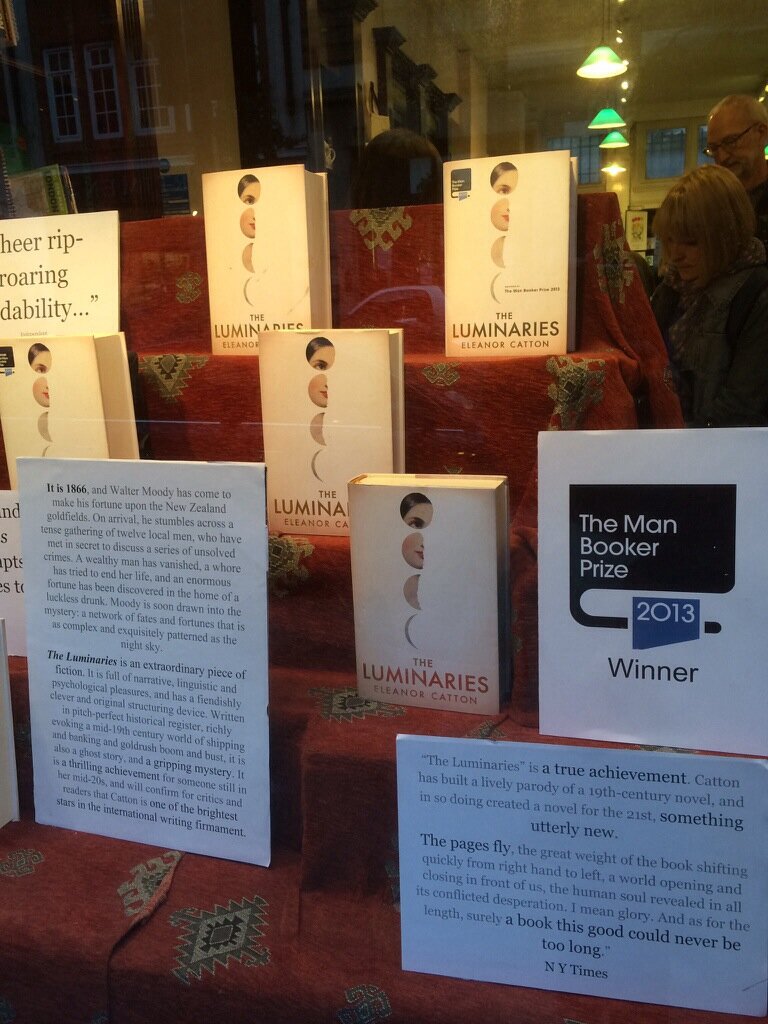
But I pressed on for a number of reasons, and in the end was glad that I did. One – I had read Catton’s first novel, The Rehearsal in 2010 and enjoyed it very much. Two – Eleanor Catton is just 28 years old, the winner of the Man Booker Prize and a graduate of the Iowa Writers Workshop. And three – when we were in England this fall, the coolest bookstore we visited , Daunt Books, had a full window display of The Luminaries.
In the end, the luminary construct of the novel was too confusing for me and somehow the literary quilt of the novel was a bit too heavy for comfort. But for a long winter’s night, Catton is an old school story teller and formidable young writer very worthy of your time.
Sunday, December 15, 2013
The Best Bookshop in England and a Review of Levels of Life by Julian Barnes
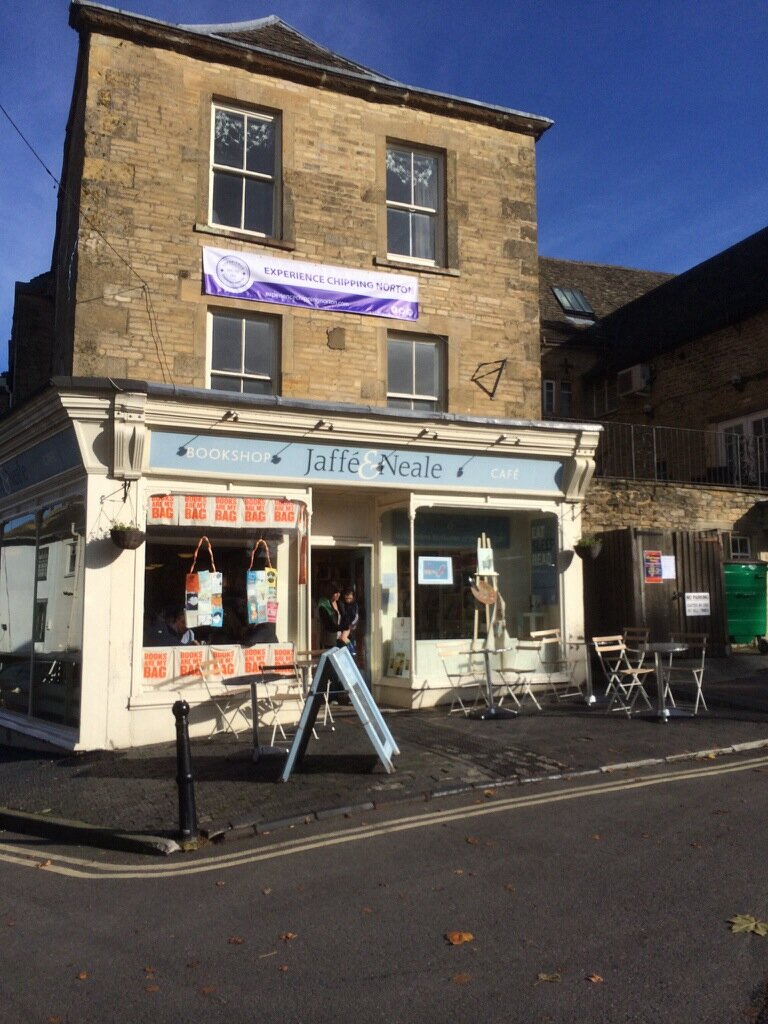
Before we travel, I always research the best independent bookstores in the areas we will be visiting. I figured that the Cotswolds in England would be so dotted with charming little book shops that it would be difficult to see them all. All of my research seemed to point me in the direction of Jaffe and Neale Bookshop and Cafe in charming Chipping Norton. We had no difficulty finding the place, as cafe tables sat in front of the building where large Books are my Bag banners hung in the front windows. The bookstore felt homey, with many nooks for reading throughout and even some comfy chairs scattered around. I would have gladly spent all day there, but we had an agenda for the day that involved visiting the nearby Hook Norton brewery in time for lunch.
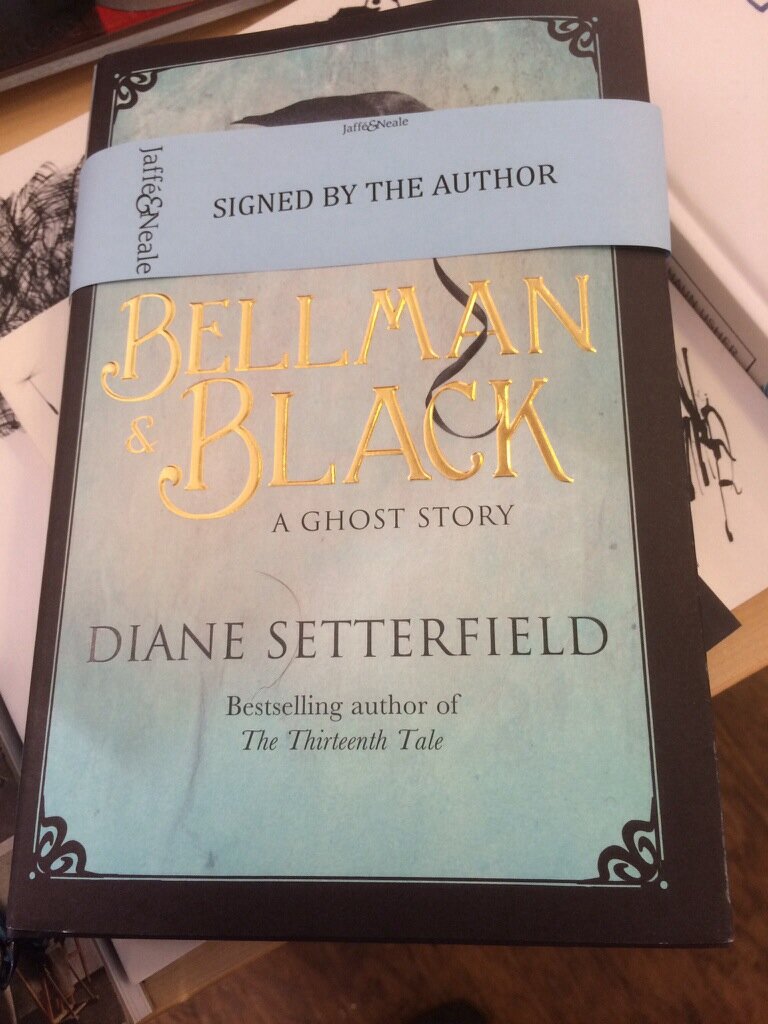
I had been reading Rachel Joyce’s The Unlikely Pilgrimage of Harold Fry, a perfectly appropriate novel to read while driving around the British countryside. I saw Joyce’s new novel, Perfect, on a shelf and carried it over to the cashier to ask if this new book lived up to the delight of Harold Fry. The woman I spoke with assured me that it did, but after I explained that I was an American on vacation who really did NOT need another book in her suitcase – that if I bought a book in England at all, I could only buy one – she took it as a challenge and recommended that perhaps I should consider Diane Setterfield’s Bellman and Black instead.
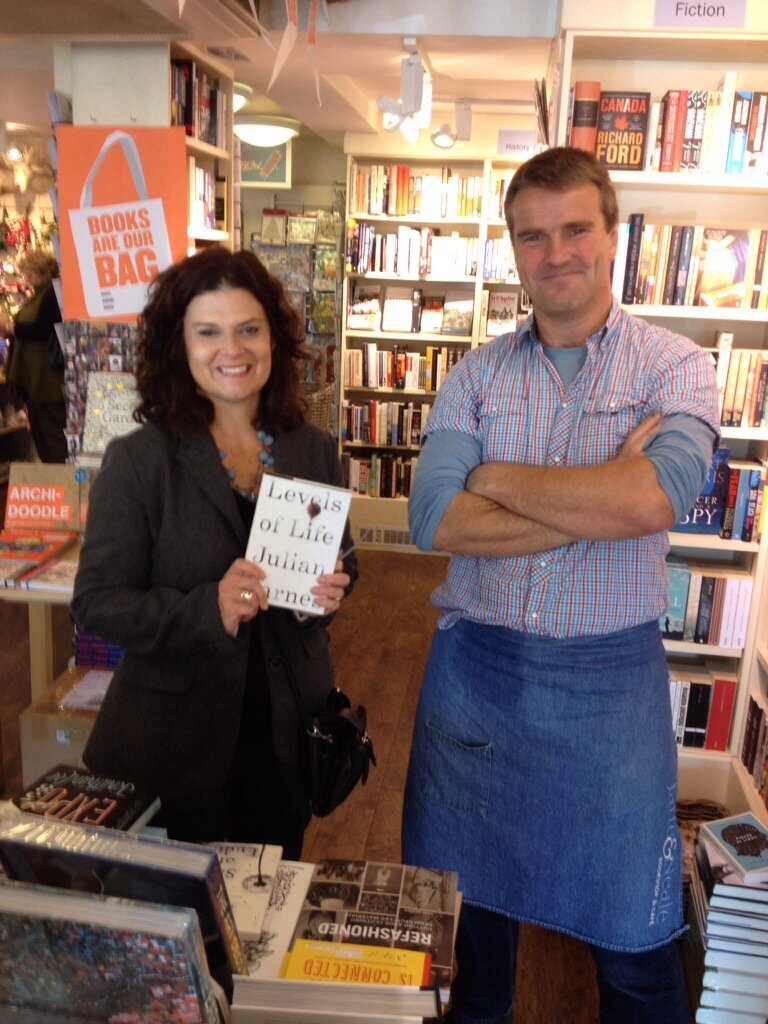
Now I was tempted. A signed copy of a book not yet available in the U.S. was worth considering, so I took the two novels to one of those inviting book nooks for comparison and consideration. I was zeroing in on a choice when I noticed that my husband was engaged in a conversation with a gentleman who he was leading my way. Alerted by his wife at the cashier’s station, Patrick Neale wondered if David was with the American woman who could only buy one book in the UK. He was personally interested in the choice I was about to make since, in addition to being the proprietor of the shop, he is the current president of the British Booksellers Association – and a fascinating person to talk with about books.
David and I chatted with him about his shop and recommended some of our favorite bookstores in American. We told him about our experiences as English teachers, how we were in England for the wedding of a former student, and our favorite books in general. When he finally got around to recommending my one book for purchase, he picked up a copy of Julian Barnes’ Levels of Life. I knew Barnes from his slim novel The Sense of an Ending , which I had read and reviewed in 2012. Neale described the novel as one with no single word out of place. He was suggesting Barnes new book – which was also thankfully slim for my suitcase.
Levels of Life is a three part memoir of sorts that begins with a section about hot air ballooning, moves into a consideration of the nuances of historical photography, and finishes with Barnes own grief suffered at the loss of his wife in from a brain tumor in 2008. It is a difficult book to recommend to friends because the last section sounds like it would be so depressing. However, the overarching premise of all three parts is “You put together two things that have not been put together before. And the world is changed.” I was personally delighted to find mention of Dame Ellen Terry in the second section, which describes photographs of actress Sarah Bernhardt taken by the 19th-century photographer and inventor Gaspard-FĂ©lix Tournachon (later known simply as Nadar). Terry was Bernhardt’s acting contemporary and the subject of my undergraduate Independent Study thesis at The College of Wooster. The book’s pacing and its weaving of historical details and naturalistic descriptions reminded me of Annie Dillard and Terry Tempest Williams – two of my favorite essayists. In the end, it is life affirming rather than deflating. The metaphor of the hot air balloon and the precariousness of its flight carries the reader to consider many levels of living and loving. I put off reading the book – and writing this review – because I knew the experience would be difficult to describe for my readers. One day in my life several things were put together – the coincidence of finding the perfect Brisith bookstore, meeting the most charming British bookseller and being handed a deeply moving book that will resonate with me for as long as my photographs of my matchless vacation with my husband remain – and my reading life was changed.
Monday, November 25, 2013
The Goldfinch by Donna Tartt
My favorite book of the year! Amazon's Book of the Year! One of the New York Times five top works of fiction for 2013! What else to I have to say to get you to put this book at the top of your Christmas list.
Thirteen year old Theo Decker and his mother have just finished admiring The Goldfinch, a legendary painting by Carel Fabritius, in a New York art museum when a bomb blast rocks the building. Theo's mother is killed, and although Theo escapes, he does so with two items that will change his life forever - an heirloom ring given to him by the dying grandfather of a girl who had caught Theo's eye AND the Fabritius painting. The rest of the novel follows Theo through repeated moves and losses, friendships and relationships, adventures and drug-induced skirmishes. There is something in this book for everyone.
I agree with Stephen King, who likened the scope of the narrative to Dickens when he reviewed the book for the New York Times . He also called it the sort of book that comes along only a few times per decade. Such is the pattern of Donna Tartt. I first read The Little Friend in 2002, when I received it as a Christmas gift from my, then, new husband David. He gave me the book and an Amish rocker that Christmas, and I sat in the rocker and rarely left it until I finished the book. I went back and read her earlier novel, The Secret History, so I guess that puts me among the Tartt fans who have been waiting over a decade for her next work. Tartt labors over her story telling, immersing herself in writing, rarely granting interviews and never apologizing for the time that passes between masterpieces.
I decided not to wait for the book from the library, and downloaded the Kindle version to my iPad and also ordered the Audible audio book so could enjoy listening to the book while I walked and while I worked in the sewing room. It helped to get me through the nearly 800 pages more quickly, because once I got in to the narrative, I wanted to stay in. In fact, although it is one of those rare books that I didn't want to finish reading, I pressed through til the end, staying up late on the night before Thanksgiving. And as soon as I finished the book, I wanted to start re-reading. The last several pages struck me as a love song to art, in all its forms, and were so lovely that it would do a disservice to the whole book to quote anything out of context.
I LOVED THIS BOOK! Final comment. You be the judge.
Thursday, October 31, 2013
The Unlikely Pilgrimage of Harold Fry by Rachel Joyce
Saturday, September 14, 2013
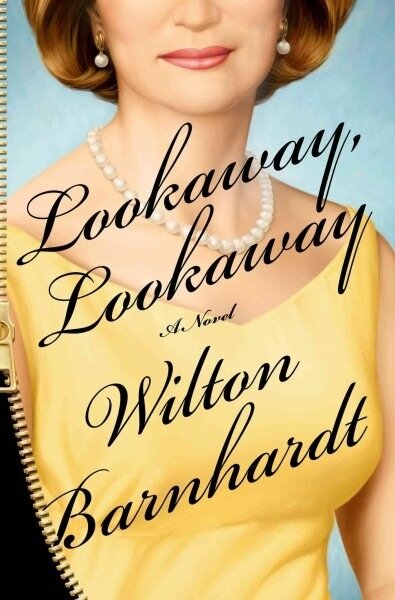
Lookaway, Lookaway by Wilton Barnhardt

Funny, funny social satire of the South complete with Faulkner references! When I first brought this book home from the library, I wasn’t sure it would be worth the time commitment – more than 360 pages. But when I met Jerene Jarvis Johnston, the central character of the opening chapter, and her old money approach to the challenges and demons she encounters, I was hooked. The book is set in Charlotte, NC (my son lives there) and Jerene works for the Mint Museum which we have visited, so there was a point of personal connection for me. Then the book’s “Southern Discomfort” was highlighted in The New York Times Book Review on August 30. Although the alternating focus on individual characters in each chapter makes the job of piecing the family saga together the reader’s task, I enjoyed the wild ride through post-Civil War Southern politics, contemporary race and gender issues and even current campus Greek living debauchery. A holiday dinner scene in the middle of the novel includes so much physical comedy that I could see this book being adapted for the screen. On the page – three thumbs up from this reviewer!
Saturday, September 07, 2013
Fin and Lady by Cathleen Schine
The main character of this “coming of age at an early age” novel is eleven year old Fin, who is orphaned in the opening chapter of this touching and sweet story. Fin must go to live with his worldly, and much older half-sister, Lady who is indulgent, careless and living in Greenwich Village. In 1963, when the novel is set, Greenwich Village is a alien landscape for young boy used to rural Connecticut. Although he hasn’t seen Lady for a few years, Fin is lovingly embraced by her and her social circle which includes a revolving set of suitors. Like Auntie Mame, Lady opens Fin’s eye to both opulence and disappointment. The strength of this novel lies in its fully drawn complex and quirky characters.
Monday, August 12, 2013
TransAtlantic by Colum McCann
I loved Colum McCann's Let the Great World Spin and was really looking forward to TransAtlantic, which has the same sort of interconnected story lines - this time about three memorable journeys in three distinctly different time periods. Jack Alcock and Arthur Brown flew the first non-stop flight across the Atlantic carrying mail in 1919. Frederick Douglass visited Dublin in 1845 to rally people around the Abolitionist cause. And George Mitchell traveled to Belfast in 1998 to participate in peace talks in bitter Northern Ireland. Interlaced with the stories of these men are the women whose secondary roles become primary in the latter portion of the book. An Irish housemaid from the Douglass section becomes the mother of Emily and grandmother of Lottie who write about and photograph the Alcock and Brown flight and supply a piece of iconic mail that is the focus of the final section of the novel. The symbolic unopened letter is passed from on generation to the next. McCann writes, "We seldom know what echo our actions will find, but our stories will most certainly outlast us." TransAtlantic is a lushly poetic novel and McCann a master of spinning an engaging historical novel.
Sunday, August 04, 2013
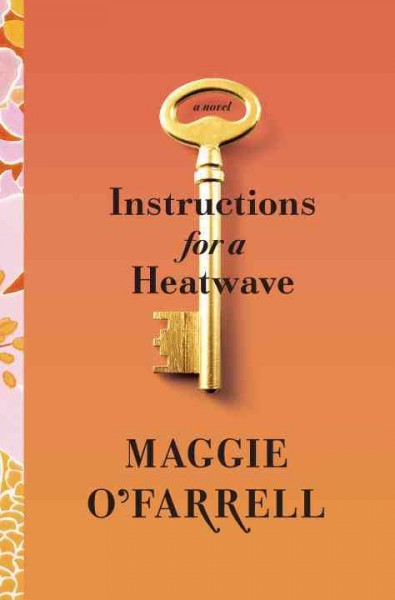
Instructions for a Heatwave by Maggie O'Farrell
I love it when my reading prescience is spot on! Instructions for a Heatwave showed up in the New York Times Book Review as I was reading it. Gretta Riordan's husband, Robert, has walked off - gone missing - in the midst of the English drought and heatwave of 1976. In the opening section of the novel she calls each of her three children home - two from England and one from New York City - to help her deal with the disappearance. The novel is a character study of sibling rivalry and buried secrets. I thoroughly enjoyed O'Farrell's storytelling. That the novel ends in Ireland with the family sitting down to eat freshly baked soda bread makes it even more appealing to me. Back when I was teaching AP English, we used to talk about novels with central characters who appeared only briefly or not at all. Robert Riordan is one such character who appears (spoiler) just when I expected him to - on the last page.
Wednesday, July 31, 2013
How to Read the Air by Dinaw Mengestu
How to Read the Air was reviewed as one of several recommended summer “road trip” novels, but I remember becoming interested in Dinaw Mengestu back when he was chosen by the New Yorker in 2010 as one of the 20 Under 40 authors to read. This is no ordinary road trip novel and Mengestu is an extraordinary storyteller. The book traces two trips – one taken by Ethiopian immigrants Yosef and Mariam to Nashville and one taken by their adult son, Josef who is anxious to retrace his parents’s tragic travel so that he might learn what truth it can shed on his own his own trouble marriage. Alternating between chapters set in the past and the present, the reader is gradually given a glimpse of the strife of acclimation – to a new land, a new language, a new job, a new relationship, and even the promise of a new life. Lush with contemplative passages about how to read the signs of life, I found myself wanting to take the journey of this novel slow.
Sunday, July 28, 2013
The Execution of Noa P. Singleton by Elizabeth L. Silver
Hardly a spoiler, Noa P. Singleton is awaiting her execution for the murder she committed ten years earlier as this crime novel opens. In sections labeled Six Months Before Execution, Five Months Before Execution, and so on, the circumstances leading up to Noa’s incarceration are revealed. Her crime has suddenly become of interest to a young lawyer who, working with the mother of her victim, thinks he can build a case to prevent her execution. Her victim’s mother has aligned herself with an organization called MAD, Mothers Against Death. Little by little the reader learns about Noa’s past and her tortured relationship all of the individuals involved in her case. Little by little, this reader tired of her as a protagonist and was secretly hoping the ending would match the title – Sorry!
Friday, July 19, 2013
The Interestings by Meg Wolitzer
I have stuck with Meg Wolitzer through several novels, although I did not care for her last one, The Uncoupling. But my AP grading comrade and trusted reading friend, Paris, recommended it recently, so I dove in. The novel is a sweeping book covering four decades in 468 pages, and it deals with large issues of life - friendship and family, marriage and fidelity, money and success. It opens with a scene that suggested I was entering a Wes Anderson-style-Moonrise-Kingdom of a novel, set in a summer arts camp in Massachusetts called Spirit-in-the-Woods, where lifelong friendships are forged during an eight week season in a humid tepee full of teens who deem themselves, The Interestings. Here protagonist Julie Jacobson becomes Jules, a far more interesting name, and meets Ash and Goodman Wolf, Ethan Figman and Jonah Bay - four characters whose lives will knit and unravel in the decades to come, against the backdrop of Vietnam, the sexual revolution, AIDS, off-shore manufacturing, 9/11 and TED talks. I ended up liking the book very much in the way that I enjoy Jonathan Franzen or Tom Perrota who grapple with essential questions in their fiction. The essential question of this book seems to be "What does it take to live an interesting life?" The answer is summed up near the end of the book, when Ethan Figman, creator of a highly successful network cartoon, claims, "Everyone basically has one aria to sing over their entire life." The book reminded me of my guarded wariness for the futures of all of the "interesting" teenagers I taught over the years - kids right out of the fictitious camp bible The Drama of the Gifted Child - who graduated from high school certain they were destined for greatness.
Tuesday, July 09, 2013
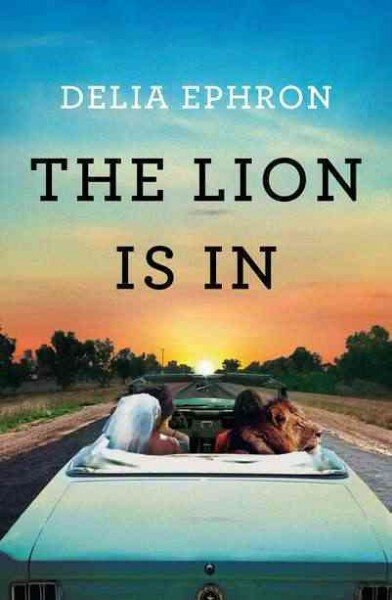
The Lion is In by Delia Ephron
The cover of this novel says it all. Delia Ephron is out to entertain in this interrupted road trip novel. Tracee, Lana and Rita are all running away from something. Tracee is a kleptomaniac in a stolen wedding gown; Lana is an alcoholic with a keen eye for trouble; and Rita, who the two others pick up hitchhiking, is escaping a harsh minister husband. Their car crashes just in front of The Lion, a tired bar that houses a jukebox, a few regular customers and a real lion in a cage. Short chapters, crazy convergences, lion tricks and colorful characters make this a perfect summer chick read.
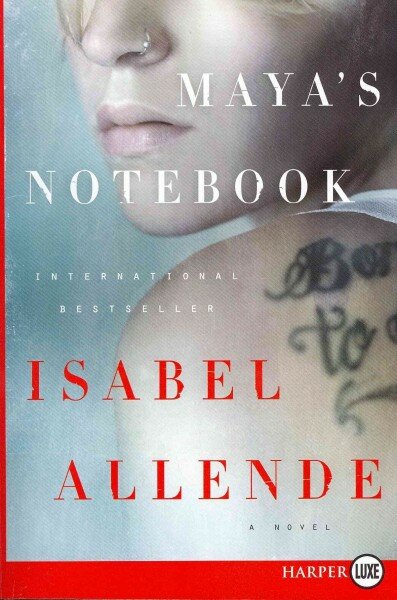
Maya's Notebook by Isabel Allende
I am a huge Isabel Allende fan and have read almost everything she has ever written, including essays and interviews. Back in the days when Borders was in town, I once hastily pre-ordered a copy of one her books, and when it arrived, it was in Spanish. The English edition wasn’t even available yet. My love affair began with House of Spirits, a book full of magical realism. Finally, after a few historical novels, Allende is back to story telling in the style of House of Spirits.
Maya is a nineteen year old in a heap of contemporary trouble. She has been raised in Berkeley, California by her grandparents and hasn’t been herself since the death of her Popo. Drugs, porn, violence, and a string of the wrong friends propel her grandmother to send Maya far, far away – to the remote Chilean island of Chiloe. There her grandmother’s friend, Manuel Arias, an introvert more than twice Maya’s age, has promised to oversee Maya’s removal from society. No internet, no contact with her past – only notebooks to record her past and recovery. Told as first person journal entries, the story of Maya’s troubled past is revealed, along Allende’s most complete assessment of Chilean political history. Allende’s uncle, Salvador Allende was killed in the bloody aftermath of the military coup that created a harsh military dictatorship, lead by General Augusto Pinochet. This history is interwoven with revelations of character relationships near the novel’s end.
This may not be Allende’s best, but the book is dedicated to the “teenagers of my tribe” and is best read as a cautionary tale. In recent interviews, Allende has shared just how autobiographic some of the events in this novel really are. Two of her husband’s adult children have died of drug related causes. Maya may be a mess in the beginning, as the Spanish cover of the novel clearly shows, but she pulls through with determination.
Sunday, June 16, 2013
And the Mountains Echoed by Khaled Hosseini
I completely swore off my no purchasing of new hardcover books promise to get my hands on a copy of Khaled Hosseini’s new novel. Of course, I have been a huge fan of The Kite Runner – teaching it for the last 6 years or so of AP English – and its sister novel, A Thousand Splendid Suns. Of course, when your expectations are that high, you run the risk of being disappointed. As soon as I finished the lovely, spell-binding opening parable, a presumed bedtime story told by a father to his son and daughter, Abdullah and Pari, I knew the author’s poetic style would still hold me in rapture. I read the whole book in a few days, and hesitated to see it end, although the first half of the book is the best, by far. Each chapter reads like a novella. I found it hard to put a chapter down once I started, partly because the chapters jump so drastically in time and setting – Afghanistan, San Francisco, Paris and Greece. Although the brother and sister of the opening chapter knit the whole book together, there are almost too many peripheral characters and I sometimes had a difficult time remembering who was who or how they figured into the whole. Without criticizing the mechanics of the novel, which were sometimes clunkier than Hosseini’s previous two, I would highlight the positives. This book has little of the violence and heart-break of the other novels. Yes – it is sad and I had tears in my eyes more than once, but this is a redemptive sibling story. It is about loss and separation – and of course the ravishing effects of war. But is isn’t the gut wrenching sort of story that was Amir’s or Mariam and Laila’s. The book encompasses a long stretch of time, generations of tragedy and recovery, and in the end, it sang of hope.
Saturday, June 15, 2013
Reconstructing Amelia by Kimberly McCreight
Upon finishing Reconstructing Amelia, I described it in a text message to a teacher friend as a crazy trash can of a novel that most high school students would probably love. Kimberly McCreight includes one of everything it takes to make a page turner – a possible suicide, some mean girls, a neglectful parent, a bit of lesbian love, a creepy teacher, a jealous best friend, a secret sisterhood and some lurid text messages. The novel alternates between third person chapters in the present that focus on Kate, the mother, and first person past tense chapters narrated by her 15 year old daughter, Amelia, who has presumably jumped from the roof of her New York private school. Through emails, blog posts, and investigations, Amelia’s life and death is reconstructed.
I have to admit, I plowed through this novel. It held my interest even as I shook my head at its unlikely twists and turns. It reminded me of Donna Tartt’s The Secret History, to which it has been compared, along with Jodi Picoult and Gillian Flynn’s Gone Girl which I have not read. I know many teenage girls that would call this a perfect beach read. For my adult friends – by all means, read it if you still miss lunchroom drama.
Wednesday, June 12, 2013
The Unchangeable Spots of Leopards by Kristopher Jansma
Rudyard Kipling’s How the Leopard Got its Spots is one of many pieces of literature that The Unchangeable Spots of Leopards alludes to. Perhaps the most telling allusion is the line from an Emily Dickinson poem – “Tell all the truth, but tell it slant”, since Jansma’s book is a series of slanted tales told by a highly unreliable narrator. The fact that you never really even know this narrator’s name enhances the colorful telling of the chapters that read more like individual interconnected tales than a novel. The narrator makes it clear in the opening chapter that he is a writer, and piques the reader’s interest by announcing “I’ve lost every book I’ve ever written.” His life story – from childhood to adulthood – is told through episodic adventures that take him all over the planet. Europe, Hong Kong, Sri Lanka, Iceland. For a while, he assumes the identity of Professor Wallace and teaches Methods and Practices of New Journalism in Dubai. This entertaining chapter includes a portion of one of Wallace’s supposed lectures on truth in journalism which announcing that, “Ours is a new generation of plagiarists. Armed with Wikipedia and Google, we can manufacture our own truths”. Throughout the novel he maintains a rivalry with Julian, who is also an author, and a romantic quest for Evelyn, who eventually becomes a princess.
At one point, the narrator muses, “Somewhere, once, I read that the only mind a writer can’t see into is the mind of a better writer.” Jansma is clearly a reader’s writer. The Unchangeable Spots of Leopards is a reader’s theme park of a novel. Holden Caulfield narrating The Princess Bride. Scattered throughout are literary references, doppelgängers and leopard sightings – real and imaginary. I enjoyed this book largely because Jansma fuels my faith in the value of literary fiction.
Saturday, May 11, 2013
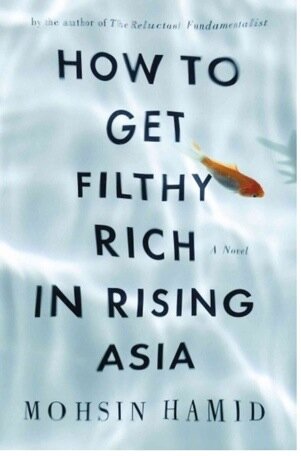
How to Get Filthy Rich in Rising Asia by Mohsin Hamid
Oh I do love a book that you don't want to finish reading because reading it is so lovely! Those books don't come along very often, but with the help of a knowledgable sales woman at Malaprop's Bookstore in Asheville, NC this one made its way into my hands. Moshin Hamid is an author I discovered last year when I read The Reluctant Fundamentalist - which has lately been made into a movie! I loved the novel and look forward to seeing the movie.
How to Get Filthy Rich in Rising Asia is couched as a self-help book and written in second person. Chapter headings suggest earnest instructions for attaining wealth - Get an Education, Learn from a Master, Work for Yourself. In each chapter, the individual that the speaker is giving instructions to ages until the final section - Have an Exit Strategy - when the end is near. This nameless individual learns about life, love and business in a nameless Asia location, and ultimately realizes what is more important than riches.
I don't know whether I agree with the reviewers who make Gatsby comparisons. I do agree with the sales clerk who convinced me to buy the book that it is one you long to dip back into - reread sections - because the prose is as liquid as the cover image. Near the end, the narrator cautions,
We are all refugees from our childhoods. And so we turn among other things, to stories. To write a story, to read a story, is to be a refugee from the state of refugees.
If I were still teaching, this is a book I would love to discuss with students. A relative short read, it will be a good book club book. One that Dave Eggers calls "Completely unforgettable".
Saturday, May 04, 2013
Flimsy Little Plastic Miracles by Ron Currie Jr.
Ron Currie Jr. came on my reader radar when colleagues at the high school started shoving copies of his Everything Matters in my face a few years back. Currie is a rising talent, having won a Young Lions Fiction Award from the New York Public library in 2007 for his first books, God is Dead. I was excited when I recently spotted this new novel on the Recent Releases display at one of the coolest independent bookstores I have visited in a long time - Malaprop's Books in Asheville, NC. I broke my moratorium on book buying and started reading it in the car, read more in the hotel, finished it as soon as I got home, so I could give it to that Currie-loving colleague - my rationalization for buying a new book in the first place. Flimsy Little Plastic Miracles is an experiment in metafiction. Ron Currie is both author and main character ( a la Tim O'Brien). One of the first things a reader notices is that some of the pages are only about one third covered with text. Some half full. Not many full consecutive pages in the book at all. This is because Currie jumps subjects like a jack rabbit. Some pages are about Ron's unquenchable love for the elusive Emma. Some are about his father's death. Some are about being banished to a Caribbean island where he is frequently violently knocked around by locals. Some are, most obscurely, about Ray Kurzweil's Singularity, predicted to occur in 2045. I kept turning pages because the book began with a hefty promise for excitement.
The first thing you need to know about me is that I am a writer. . . . I quit writing for one reason, then stayed for another. The first reason was I killed myself, which obviously makes it hard to go on writing.
Ron Currie's suicide propels the narrative but details and motives are murky and I didn't end up believing any part of the story that the authoritative narrative voice promises is completely capital T - true. I wanted to love it - but in the end the ploy was as flimsy as the title.
Subscribe to:
Comments (Atom)