Tuesday, June 13, 2006

Kafka on the Shore by Haruki Murakami


I started reading this book last summer and put it aside. This time I really enjoyed the mystery that unfolds through the pages of Murakami's novel. Kafka Tamura is a teenage runaway who randomly chooses to hideout in the one town which will connect him to his past. The chapters detailing Kafka's journey are alternated with chapters detailing the parallel story of Nakata, a simpleminded war veteran who communicates with cats and commits a serious crime that links him to Kafka. Confusing - yes! But the ending is very unique and makes the read worthwhile.

Tuesday, May 30, 2006

Adverbs by Dan Handler


This book is FUN to read. Handler is best known for his Lemony Snicket series, but this book of interrelated love stories uses adverbs as chapter titles. The composition, as a whole, is more like a work of jazz - variations and repetitions of words and phrases. It is a playground for a reader looking for a romp.

Monday, May 22, 2006

Girly by Elizabeth Merrick


This book took me a while to get through, but I'm glad that a read it. Racinda Hart, the main character, is an adolescent girl trying to find her own voice through first encounters with cultlike religion, sexuality, drugs and alcohol and generations of dysfuctional family life. Merrick is someone to watch. You can learn more about her mission as a writer from her website www.elizabethmerrick.com. Check it out.

Sunday, May 07, 2006

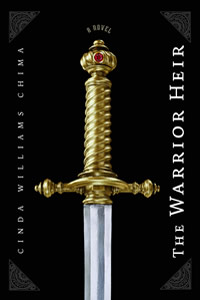
The Warrior Heir by Cinda Chima


This is a great book for young adults and even adults looking for a page turner of the "Harry Potter" variety. My praise for this fantasy novel is particularly high because the author, Cinda Chima, is the parent of two great boys who have been AP English students of mine. Cinda came in to talk to my students this month about the process of writing a novel, finding a publisher and even finding the right cover art. This book is set in a fictional town modeled on Oberlin Ohio and she showed slides of some of the location that were inspirational to her. The greatest thing I can say about this book is that the sequel is on the way next fall. You will want to read more of this talented author's work!

Friday, April 21, 2006

The Book Thief by Markus Zusak


This book is amazing!!! I read almost all of it on Easter Sunday and finished with tears in my eyes for the last 25 pages. The narrator of this story is death, but the protagonist is a child who steals books from Nazi book burnings. Her voice and heart-breaking story is so endearing. Zusak's book has been marketed to young adults in some countries, but was released as an adult novel in the United States. It reminded me a lot of Jonathan Safron Foer's style, especially with the graphic sections and switches in point of view. I highly recommend this amazing book. You will not be able to put it down.

The Picture of Dorian Grey by Oscar Wilde


Another classic I have long overlooked. This one shows up on the AP test frequently enough that I decided to check it out - especially because I have had students who said it was their favorite book. What a great story. I loved all of the ideas about beauty and art and recognized many often quoted lines of Wilde's. I am so glad I took the time to read this book.

Madame Bovary by Gustave Flaubert


Here is a classic that I never got around to reading. Although I knew the general plot, I found Flaubert's descriptive style engaging and enjoyed reading Emma's story.

Saturday, March 25, 2006

Eat, Pray, Love by Elizabeth GIlbert


This book is a gem. Gilbert worked her way through the sadness of divorce by traveling to Italy, India and Indonesia. I was interested in her experiences practicing yoga at an ashram in India and her lush descriptions of the Indonesian countryside. Her book, which is divided into 108 section to represent the 108 beads of the japa mala , is a celebration of eating, meditation, friendship and love.

So Long See You Tomorrow by William Maxwell


Our book club selection this month was this slim novel by William Maxwell. I had read A Folded Leaf by Maxwell a bunch of years ago, and I don't remember much about it. This novel opens with the murder of a farmer that is narrated by a young boy who is a neighbor. Clearly a post-modern novel, the point of view shifts several times to present the events leading up to the murder and the years afterward. I enjoyed the style, although the characters are sometimes hard to keep straight through the shifting perspectives, which even include the point of view of the farm dog.

Sunday, March 19, 2006

The Female of the Species by Joyce Carol Oates


I read a few of the stories in this new short story collection by Joyce Carol Oates. Disturbing - as usual. One particular story, "Doll: A Romance of the Mississippi" about a child prostitute reminded me of Southern Gothic stories. I'm still trying to be faithful to Oates and bring home every new book.

Monday, March 13, 2006

I Don't Know How She Does It by Allison Pearson


I dismissed this book when it first showed up in huge displays at the bookstore with a choice of pastel cover colors. I thought it looked too "chick lit" for my tastes. But after reading Marjorie Williams' essay in The Woman at the Washington Zoo, I got it from audible.com and have been listening to it while I run and laughing out loud. First the reader has a great British accent that brings the flighty character of Kate Redding to life. Secondly, Kate has two children whose names are Benjamin and Emily - the same as the names of my two children. This novel is fun, fun, fun and plenty close to home for any working mother who has tried to do it all.

Friday, March 10, 2006

The Woman at the Washington Zoo by Marjorie Williams


David brought home this lovely book of essays by the late Marjorie Williams, a correspondent for the Washington Post who died of cancer last year. These essays cover a range of topics from politics to motherhood. One of my favorite was a satiric piece about Real Simple magazine. She also had a great essay about the novel I Don't Know How She Does It by Allison Pearson. It was so funny, it inspired me to go out the get the book.
There is a wonderful website for the book -
The Woman at the Washington Zoo
I have recommended it to journalism teachers and mothers who like to read.

Wednesday, March 08, 2006

Are Men Necessary by Maureen Dowd


Honestly, I am reading bits and pieces of this book. Dowd's satiric edge is pretty sharp, but I am finding myself frustrated by all of the references to pop culture that she uses to talk about men. Like name dropping movies that I have not seen. It is more "Cosmopolitan" than "Harpers" in its treatment of the battle of the sexes. Very entertaining, but I am glad it is a library book.

Wednesday, February 22, 2006

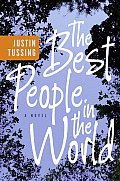
The Best People in the World by Justin Tussing


I ran out and got this book as soon as it came out, not because it was excerpted in the New Yorker last summer. Not because it was reviewed in the New York Times Book Review two weeks ago. Not because Tussing is a product of the Iowa Writer's Workshop. But because it was recommended to me by my former student, Tussing's friend and fellow writer, Salvatore Scibona, whose name appears in the acknowledgements. I was intrigued by the story of a high school boy falling in love with his teacher. But I was more intrigued with the character of Shiloh Tanager, the derelict who becomes the third wanderer in the group when the boy and his teacher leave Kentucky for the bliss of an abandoned house in Vermont. Their roadtrip turns into a journey to self-discovery. I loved Tussing's narrative voice, but I was a little confused by the conversations between two nameless men which begin each section of the novel. This is a book I can't wait to recommend to all of my reading friends.

Friday, February 03, 2006

On Beauty by Zadie Smith


When I first started reading this book, I walked around wondering why everyone wasn't talking about it. I loved the characters, the expose of liberal arts college campuses, the irony. I didn't make it all the way through White Teeth when I tried reading it a few years back, but I couldn't put On Beauty down. Then, somewhere in the middle of the book I lost interest. The characters didn't seem as real to me. The plot got slow. I kept at it and the end was awesome. Once again, I am walking around wondering who everyone isn't talking about this great novel.

Saturday, January 21, 2006

Teacher Man by Frank McCourt


Of course I was waiting for this book to come out. I read both of McCourt's other installments of his memoir, and my husband, David, and I heard him speak at an NCTE conference a few years back, so I heard every page in his own voice. His stories of teaching are typical and yet so colorful because of his flair for storytelling. I thought the book became repetitve in the middle, but the end is just lovely. A true commentary on the blessings of the writing life. And the last page, like the las page of Angela's Ashes, brings a smile of joy.

Thursday, January 19, 2006

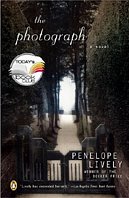
The Photograph by Penelope Lively


I have wanted to read a Penelope Lively novel for a while now. After picking up her new "anti-memoir" Making It Up and browsing it, I decided I should read one of her novels first. Since The Photograph has gotten so much popular praise I chose it and I read it in two evenings. What a great experiment in various points of view. The plot begins when a researcher finds an old photograph of his wife, now deceased, and her sister's husband. He suspects there was a relationship in the past and decides the research his wife's past. His investigation causes a chain reaction of hurt feelings and misunderstandings, each narrated by a different person involved in some portion of the story. I loved it.

Monday, January 16, 2006

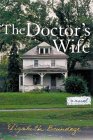
The Doctor's Wife by Elizabeth Brundage


I'll be honest. I am a sucker for books written by graduates of the Iowa Writer's Worshop - just to keep up with the new names. Brundage does not seem worthy of her connection to the workshop. This psychological thriller about an assassination attempt on an abortion clinic doctor seemed more like Stephen King's Misery than a literary novel. In the end, it is just another novel about adultery, crazy artists and college professors who have more time to meet in motel rooms than they seem to spend in the classroom. It is a thin novel - but I could see it being turned into a pretty exciting movie.

Saturday, January 14, 2006

The Family Tree by Carol Cadwalladr


What a great book! I did not know anything about this British novel when I saw displayed at Borders, but the blurb on the back that compared it to Zadie Smith and Bridget Jones got me interested. The book is very cleverly written and pretty informative, too. Rebecca, the main character, is married to a geneticist who gives her insight into the abnormalities in her family tree. The novel spans three generations - Rebecca's grandmother and mother's lives as well as her own. Each section of the novel opens with a dictionary definition that lends meaning to the section. In the end, it is about about redemption and roots. I loved it.

Saturday, January 07, 2006

The Town That Forgot How to Breathe by Kenneth Harvey


The reviewer that described this novel as the love child of Stephen King and Annie Proulx was right on. It is a creepy tale set in New Foundland. The central character is a man on the brink of divorce, who brings his daughter to summer in a remote fisthing town. Ghosts, spirits of those buried at sea, raving locals - all can be found in the town of Bareneed. I had read a review of this book back in the summer that made it sound intriguing. Although it is not the sort of fiction I normally read, it was a good book to get lost in over the holiday break. I liked how in the end, Harvey suggests that these characters are all alive in his imagination as a result of stories his grandmother told him as a child.

Sunday, January 01, 2006

Kitchen Confidential by Anthony Bourdain


This is what is playing in my ipod right now. We got a treadmill for Christmas, so I am hearing about great food and Bourdain's crazy experiences in the restaurant industry while I work off my Christmas cookie pounds. It is a very entertaining book and Bourdain's voice gives it the sound of authenticity

Tuesday, December 27, 2005

Veronica by Mary Gaitskill


My Christmas present from my husband this year was Veronica by Mary Gaitskill. It is beautifully written but not a book that I think a lot of my friends would enjoy. The narrator is a fashion model who views her success through the eyes of her friend, Veronica, who is dying of aids. The details of her modeling life are pretty sordid. It is a story of friendship.

Sunday, December 04, 2005

AP Free Choice Book List 2005-2006

Free Choice Booklist for AP English 2005-2006 Mrs. Lackey
Choose one title and have book available to bring to class by Monday, December 12th.

Nonfiction Selections
Teacher Man by Frank McCourt
For 30 years Frank McCourt taught high school English in New York City and for much of that time he considered himself a fraud. It's about educating, about forming intellects, about getting people to think. McCourt's many fans will of course love this book, but it also should be mandatory reading for every teacher in America. And it wouldn't hurt some politicians to read it, too.

Blink by Malcolm Gladwell
Blink is about the first two seconds of looking--the decisive glance that knows in an instant. Gladwell campaigns for snap judgments and mind reading with a gift for translating research into splendid storytelling. The key is to rely on our "adaptive unconscious"--a 24/7 mental valet--that provides us with instant and sophisticated information to warn of danger, read a stranger, or react to a new idea.

Into the Wild by Jon Krakauer
After graduating from Emory University in Atlanta in 1992, top student and athlete Christopher McCandless abandoned his possessions, gave his entire $24,000 savings account to charity and hitchhiked to Alaska, where he went to live in the wilderness. Four months later, he turned up dead. His diary, letters and two notes found at a remote campsite tell of his desperate effort to survive, apparently stranded by an injury and slowly starving.

Fast Food Nation: The Dark Side of an All American Meal by Eric Schlosser
Fast food has hastened the malling of our landscape, widened the chasm between rich and poor, fueled an epidemic of obesity, and propelled American cultural imperialism abroad. That's a lengthy list of charges, but here Eric Schlosser makes them stick with an artful mix of first-rate reportage, wry wit, and careful reasoning.

Reading Lolita in Tehran – A Memoir in Books by Azar Nafisi
For two years before she left Iran in 1997, Nafisi gathered seven women at her house every Thursday morning to read and discuss forbidden works of Western literature. Azar Nafisi’s luminous tale offers a fascinating portrait of the Iran-Iraq war viewed from Tehran and gives us a rare glimpse, from the inside, of women’s lives in revolutionary Iran.

The Culture of Fear : Why Americans are Afraid of the Wrong Things by Barry Glassner
Glassner explains why Americans are afraid, exposing the people and organizations that manipulate our perceptions and profit off of our anxieties; politicians who attempt to win elections by heightening concerns about drug use and crime; advocacy groups that raise money by exaggerating the prevalence of particular diseases; and finally and perhaps most perniciously, the media that peddle new scares each week in desperate attempts to garner ratings.

The World is Flat by Thomas L. Friedman
What Friedman means by "flat" is "connected": the lowering of trade and political barriers and the exponential technical advances of the digital revolution have made it possible to do business, or almost anything else, instantaneously with billions of other people across the planet. Friedman has a flair for business reporting and finds amusing stories about Wal-Mart, UPS, Dell and JetBlue, among others, that relate to his basic theme.

Fiction Selections
Crime and Punishment by Fyodor Dostoevsky
Raskolnikov, a destitute and desperate former student, commits a random murder without remorse or regret, imagining himself to be a great man far above moral law. But as he embarks on a dangerous cat-and-mouse game with a suspicious police investigator, his own conscience begins to torment him and he seeks sympathy and redemption from Sonya, a downtrodden prostitute.

The Awakening by Kate Chopin
The Awakening begins at a crisis point in twenty-eight year-old Edna Pontellier's life. Edna is a passionate and artistic woman who finds few acceptable outlets for her desires in her role as wife and mother of two sons living in conventional Creole society

The Sound and The Fury by William Faulkner
Faulkner’s story of the fall of the aristocratic Compson family, and, implicitly, of an entire social order, from four different points of view.

The Handmaid's Tale by Margaret Atwood
In the world of the near future, who will control women's bodies? Offred is a Handmaid in the Republic of Gilead., Offred and the other Handmaids are only valued if their ovaries are viable.

The God of Small Things by Arundhati Roy
Set in Kerala, India, during the late 1960s when Communism rattled the age-old caste system, the story begins with the funeral of young Sophie Mol, the cousin of the novel's protagonists, Rahel and her fraternal twin brother, Estha. Beneath the drama of a family tragedy lies a background of local politics, social taboos and the tide of history, all of which come together in a slip of fate.

Middlesex : A Novel by Jeffrey Eugenides
From the opening paragraph, in which the narrator explains that he was "born twice," first as a baby girl in 1960, then as a teenage boy in 1974, readers are aware that Calliope Stephanides is a hermaphrodite. To explain his situation, Cal starts in 1922, when his grandparents came to America.

You Shall Know Our Velocity by Dave Eggers
In this, his first novel, Dave Eggers has written a moving and hilarious tale of two friends who fly around the world trying to give away a lot of money and free themselves from a profound loss.

Everything is Illuminated by Jonathan Safran Foer
A young Jewish American--who just happens to be called Jonathan Safran Foer--travels to the Ukraine in the hope of finding the woman who saved his grandfather from the Nazis. He is aided in his search by Alex Perchov, a naïve Ukrainian translator, Alex's grandfather (also called Alex), and a flatulent mongrel dog named Sammy Davis Jr. Jr. On their journey through Eastern Europe's obliterated landscape they unearth facts about the Nazi atrocities and the extent of Ukrainian complicity that have implications for Perchov as well as Safran Foer.

Monday, November 28, 2005

Missing Mom by Joyce Carol Oates


I decided to try another Joyce Carol Oates book and took this one along when we went to my father-in-law's funeral. I started to read the book in a great bakery in Athens Ohio called Big Chimney. I opened up the book and read the postscript which mentions the source for all of the bread baking references in the book. Also, it is Oates' novel about the loss of her own mom. Uncanny coincidence. I was not totally impressed with this one. It took me a long time to get through it - partially because I was busy with pre-holiday preparations, but partially because the story seemed flat and dragged on too long.